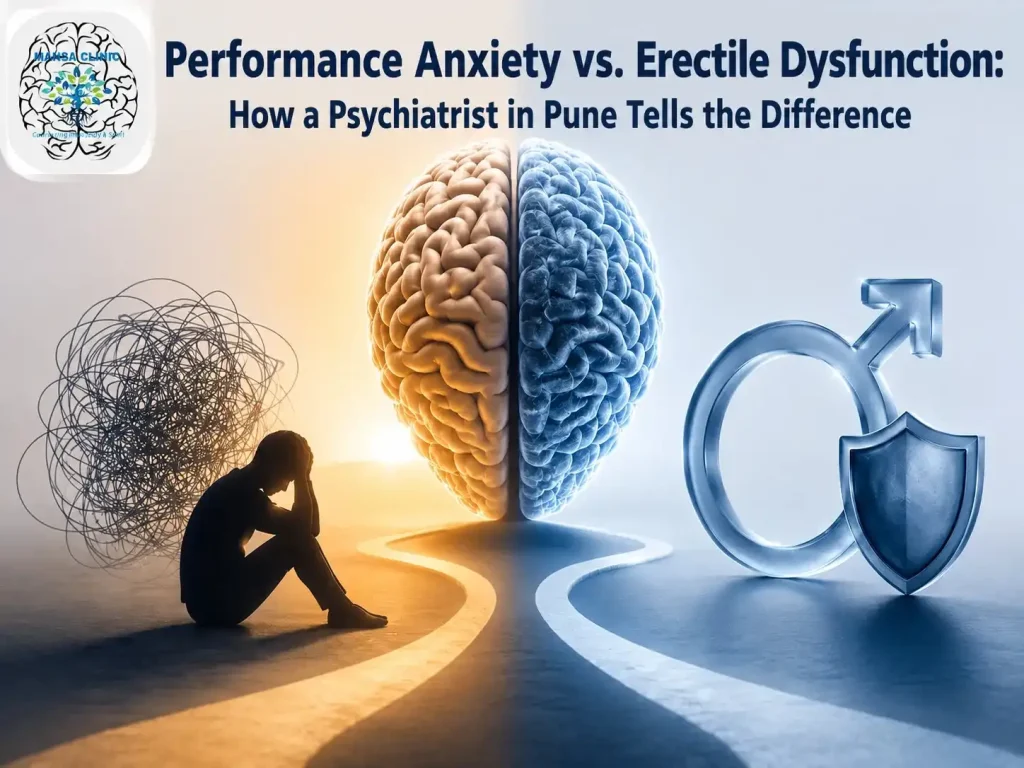
A man walks into a psychiatrist’s clinic in Aundh convinced that something is physically wrong with his body. He has already searched the internet at 2 a.m., read forums, and quietly worried for weeks. In a large number of cases, the actual issue sits not in the body but in the mind. Performance anxiety and erectile dysfunction produce the same visible outcome in the bedroom, yet they come from very different places, and treating one as the other wastes months and adds unnecessary stress to an already stressful situation. Pune’s growing corporate population, with its long work hours, high performance culture, and constant comparison on social media, has pushed more men toward psychiatrists asking the same question: is this anxiety, or is this ED? This article walks through how a trained psychiatrist separates the two conditions, what signs point toward each, and where to find reliable performance anxiety treatment Pune clinics currently offer.
Key Takeaways
- Two different roots: Performance anxiety is a psychological response to fear and pressure, while erectile dysfunction often has a physical root, though the two frequently overlap and feed into each other.
- Situational clue: Situational difficulty, where a man functions normally alone but struggles with a partner, usually points toward anxiety rather than a physical condition.
- Full evaluation: A psychiatrist evaluates sleep patterns, stress levels, relationship context, and medical history before reaching any diagnosis.
- What treatment involves: Effective performance anxiety treatment Pune programmes combine cognitive behavioural therapy, psychosexual counselling, and medical assessment where required.
- Why early care matters: Left untreated, performance anxiety can develop into genuine erectile dysfunction over time through a repeated cycle of fear, failure, and avoidance.
Quick Facts
- Typical age of onset: performance anxiety commonly appears in men between 20 and 35 years, while erectile dysfunction linked to physical causes tends to rise sharply after 40.
- Morning erections: usually present in men with performance anxiety, usually reduced or absent in men with vascular or hormonal ED.
- Recovery pattern: performance anxiety often improves within 6 to 12 weeks of structured therapy and counselling.
- Common triggers: a new relationship, a first sexual encounter, pressure following a previous failed attempt, or comparison with pornography.
What Is Performance Anxiety, Really?
Performance anxiety is fundamentally a fear response. The moment a man begins worrying about whether he will “perform” well, his body shifts into a mild fight or flight state. Adrenaline and cortisol rise, blood vessels narrow, and blood flow that should move toward the genitals gets redirected toward muscles and the brain instead. The result looks identical to erectile dysfunction from the outside, but the cause is entirely psychological.
This pattern shows up most often in specific situations rather than every single time. A man may have no trouble at all during masturbation, wake up with a normal morning erection, and still struggle the moment a partner is involved. First encounters with a new partner, sex after a long gap, pressure to match unrealistic expectations set by pornography, or lingering embarrassment from one earlier failed attempt can all trigger this cycle. Once it starts, the anxiety about failing again often becomes a bigger obstacle than whatever caused the first episode.
Work stress plays a significant role too. Many men consulting psychiatrists in Pune’s IT and corporate corridors carry deadline pressure, long commutes, and disturbed sleep straight into the bedroom. The nervous system does not switch off simply because the location has changed.
What Is Erectile Dysfunction?
Erectile dysfunction, in clinical terms, is the persistent inability to achieve or maintain an erection firm enough for satisfactory sexual activity, occurring consistently over a period of at least three months. Unlike performance anxiety, genuine ED usually has an identifiable physical contributor, and it tends to appear gradually rather than overnight.
Common physical causes include diabetes, high blood pressure, cardiovascular disease, high cholesterol, low testosterone, obesity, smoking, and heavy alcohol use. Certain medications, particularly some antidepressants, blood pressure drugs, and antihistamines, can also interfere with erectile function as a side effect. Neurological conditions and pelvic surgery are less common but relevant contributors as well.
The key clinical difference is consistency. Physical ED tends to show up across every situation, whether alone or with a partner, and morning erections typically become weaker or disappear altogether as the underlying vascular or hormonal cause progresses. This consistency is one of the strongest clues a psychiatrist relies on during assessment.
Performance Anxiety Treatment Pune: What Actually Works
Once a psychiatrist confirms that anxiety, not a physical condition, sits at the root of the problem, treatment shifts entirely toward the mind rather than the body. The most consistently effective performance anxiety treatment Pune clinics recommend centres on structured psychological work rather than medication as the first step.
Cognitive behavioural therapy, or CBT, forms the backbone of this approach. It helps a man identify the specific thoughts that trigger anxiety in the moment, such as fear of judgment or memory of a past failure, and gradually replace those thoughts with more realistic ones. Psychosexual counselling goes a step further by addressing the couple’s dynamic together, since a partner’s reaction to an episode often determines whether anxiety fades or deepens.
Mindfulness-based techniques and gradual exposure exercises are also used to interrupt the anticipatory anxiety cycle. Rather than avoiding intimacy altogether, which only reinforces fear, patients are guided through structured steps that rebuild confidence at a manageable pace. Sexual health counselling offered through a psychiatry-led team ensures that any overlapping medical concerns are ruled out at the same time, so treatment does not miss a physical contributor hiding behind an anxious presentation.
Sleep correction, stress management, and reducing alcohol intake before intimacy often form a supporting part of the plan, since all three directly affect the nervous system’s ability to relax.
How a Psychiatrist Tells the Difference: The Clinical Approach
Diagnosis begins with a detailed history, not a quick prescription. A psychiatrist typically asks about the onset of the difficulty, whether it happens in every situation or only in specific ones, whether morning erections are present, and whether masturbation is unaffected while partnered sex is not. These questions alone often reveal a clear pattern within the first consultation.
Standardised questionnaires such as the International Index of Erectile Function help quantify severity and track progress over time. Where a physical cause seems possible, the psychiatrist coordinates bloodwork covering testosterone, blood sugar, and lipid profile, and refers the patient to a urologist if needed. This collaborative approach through adult psychiatric services avoids the common mistake of treating a purely psychological issue with medication meant for a vascular condition, or the opposite, dismissing a genuine physical problem as “just stress.”
Relationship context matters just as much as the physical history. A psychiatrist will often ask how a partner responded to the first episode, since criticism or visible disappointment tends to intensify anxiety, while calm reassurance tends to reduce it.
Where Performance Anxiety and ED Overlap
The two conditions are not always separate boxes. A man who develops genuine ED from a physical cause can easily develop secondary performance anxiety on top of it, worrying about every future attempt even after the physical issue is treated. Equally, untreated performance anxiety that continues for years can eventually contribute to real erectile difficulty, since chronic stress hormones affect vascular health over time.
This overlap is exactly why an integrated approach matters more than a single-track one. Marital counselling services become relevant here because sexual difficulty rarely stays contained to the bedroom. It affects communication, self-esteem, and closeness between partners, and addressing the relationship alongside the individual usually produces faster, more lasting results than treating either in isolation.
Statistics at a Glance: Performance Anxiety vs ED
| Factor | Performance Anxiety | Erectile Dysfunction |
| Onset | Sudden, situational | Gradual, progressive |
| Morning erections | Usually present | Often reduced or absent |
| Common age group | 20 to 35 years | 40 years and above |
| Occurs during masturbation | Usually normal | Sometimes affected too |
| Response to reassurance | Often improves | Rarely changes on its own |
| Primary cause | Psychological stress, fear of failure | Vascular, hormonal, neurological, or medication related |
When to See a Psychiatrist in Pune
Occasional difficulty is normal and does not require professional help. A consultation becomes worthwhile when the problem persists for more than a few weeks, when it starts affecting confidence outside the bedroom, when a man begins avoiding intimacy altogether, or when anxiety about performance starts spilling into other areas of daily life such as sleep or work concentration.
There is no shame in seeking help early. A psychiatrist-led evaluation, rather than jumping straight to unverified online remedies or unregulated supplements, is the safest and quickest route to an accurate diagnosis. Booking a consultation directly with a qualified psychiatrist avoids months of guesswork and self-diagnosis.
About Dr. Ninad Baste and Mansa Clinic
Dr. Ninad Baste completed his MD in Psychological Medicine from Seth GS Medical College, Mumbai, and served as President of the Indian Psychiatry Society, Pune Chapter, during 2017 to 2018. He has worked as a postgraduate guide and associate professor at Smt. Kashibai Navale Medical College, and his specialist interests include sexual medicine, marital counselling, neurocognitive medicine, and personal counselling, making him well suited to cases where anxiety and physical concerns overlap.
Mansa Clinic, located at Parihar Chowk in Aundh, brings together a psychiatrist-led, multidisciplinary team of eight specialists covering adult psychiatry, sexual health, marital and psychological counselling, geriatric psychiatry, and child and adolescent care under one roof. Every patient is seen and assessed directly by an MD psychiatrist rather than a counsellor alone, and the clinic is designed with complete privacy in mind, with no shared waiting areas for different services. For men in Aundh, Baner, Wakad, and Kothrud dealing with performance-related worry, this combination of psychiatric expertise and confidential, judgment-free care makes early evaluation considerably easier.
Conclusion
Performance anxiety and erectile dysfunction can look identical from the outside, but they call for very different treatment paths, and getting the diagnosis right saves months of frustration for both partners. A psychiatrist trained to look at history, timing, and relationship context can usually tell the two apart within the first consultation, then guide a clear plan forward, whether that means structured therapy, medical evaluation, or a combination of both. If a pattern of difficulty has persisted for a few weeks or more, reaching out for professional performance anxiety treatment Pune residents trust is a far better first step than months of silent worry or unverified online advice.
Frequently Asked Questions
Can performance anxiety turn into permanent erectile dysfunction?
Yes, in some cases. Repeated cycles of fear and failure keep stress hormones elevated, and over years this can genuinely affect vascular function. This is why early treatment matters, well before the pattern becomes physically entrenched.
Is medication like Sildenafil helpful for performance anxiety?
It can offer short-term reassurance in some cases, but it does not address the underlying fear, and many men become psychologically dependent on it rather than resolving the anxiety itself. A psychiatrist usually recommends therapy as the primary treatment.
How long does treatment for performance anxiety usually take?
Most men see noticeable improvement within 6 to 12 weeks of consistent therapy, though this varies based on how long the anxiety pattern has been present and whether a partner is involved in the counselling process.
Should I see a urologist or a psychiatrist first?
A psychiatrist is a sensible first step in most cases, since the initial consultation can determine whether the cause is psychological, physical, or both, and coordinate a urology referral if bloodwork or examination points to a physical cause.
Is it normal to feel embarrassed discussing this with a doctor?
Yes, and it is extremely common. Psychiatrists who specialise in sexual health, including at Mansa Clinic, handle these consultations regularly and maintain strict confidentiality, so there is no reason to delay a conversation out of embarrassment.

Dr. Ninad Baste
DR. NINAD BAST, MBBS MD [Psychological Medicine]
Affiliations: Maharashtra Medical Council [registration no.: 2003/03/1356], Pune Psychiatry Association, Indian Psychiatry Society, Bombay Psychiatry Society.
A desire to understand patients' needs in their illness phase and help them through it led Dr. Ninad to specialize in psychiatry after completing his MBBS. He earned his MD in psychological medicine from Mumbai's prestigious Seth GS Medical College. His special areas of interest are neurocognitive medicine, sexual medicine, marital counseling, and personal counseling.
He held the post of president of the Indian Psychological Society [IPS-Pune Chapter] for the year 2017–2018. Dr. Ninad was also a postgraduate guide and an associate professor at Smt. Kashibai Navale Medical College and a general hospital. He has worked on the editorial board of the Annals of Indian Psychiatry, which is the official journal of the IPS-West zone.
He has been a faculty member for various conferences and a member of the organizing committees of some conferences held in Pune.