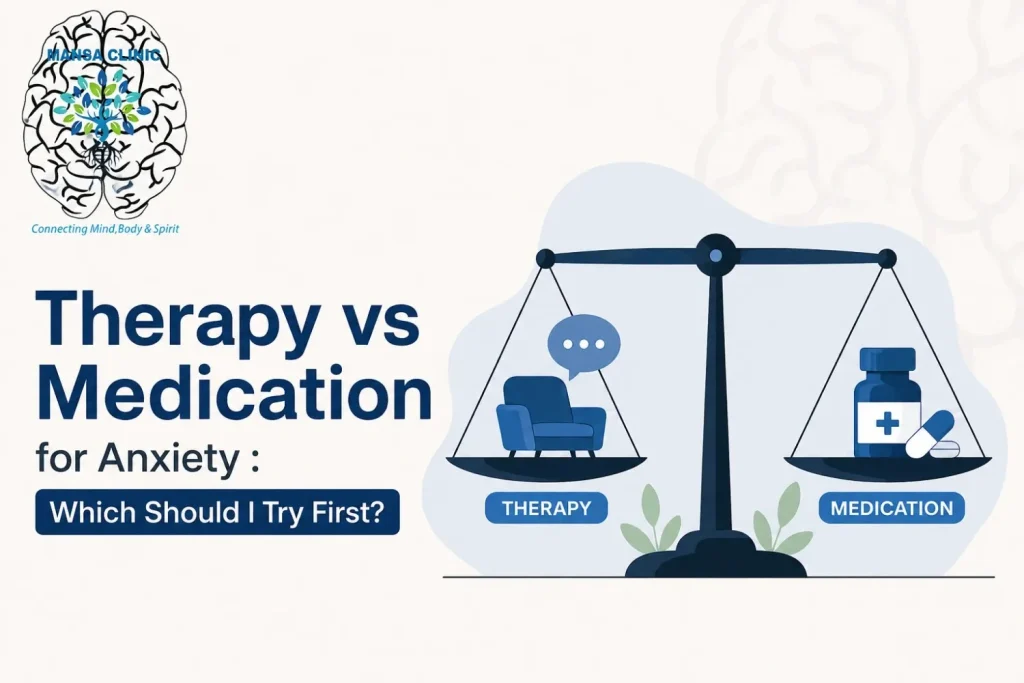
Anxiety is one of those things that sneaks up on you. One day you are feeling a little on edge before a meeting, and before you know it, you are lying awake at 2 a.m., heart pounding, replaying conversations that happened three weeks ago. If that sounds familiar, you are not alone and more importantly, there is real, effective help available. But the moment most people decide to seek that help, they hit a fork in the road: therapy vs medication for anxiety which one do you actually start with? It is a question that deserves a thoughtful, honest answer, not a one-size-fits-all recommendation. The truth is, the right starting point depends on the type of anxiety you are experiencing, how severe it is, how long it has been going on, and what your own life situation looks like. This blog will walk you through everything you need to know to make that decision with confidence.
Understanding Anxiety Before You Treat It
Before we compare therapy and medication, it helps to understand what anxiety actually is because “anxiety” is not one single thing. It is an umbrella term that covers several distinct conditions, each with its own triggers, symptoms, and treatment responses.
Generalised Anxiety Disorder (GAD) involves persistent, hard-to-control worry about multiple areas of life work, health, family, finances that is present more days than not. Panic disorder involves sudden, intense episodes of fear accompanied by physical symptoms: racing heart, breathlessness, chest tightness, dizziness. Social anxiety disorder centres on a deep fear of being judged or embarrassed in social situations. Specific phobias are intense, irrational fears of particular objects or situations. And then there is anxiety that rides alongside other conditions depression, OCD, PTSD where treating the anxiety alone is not enough.
Why does this matter for the therapy vs medication question? Because different anxiety presentations respond differently to different treatments. A person with a specific phobia, for example, is unlikely to benefit much from antidepressant medication but will likely see dramatic improvement with a short course of exposure-based therapy. Someone with severe GAD and significant physical symptoms may need medication to stabilise enough to engage meaningfully in therapy.
What Therapy Does for Anxiety
Therapy particularly Cognitive Behavioural Therapy (CBT) is considered the gold-standard psychological treatment for anxiety disorders. The evidence base behind it is enormous. Decades of randomised controlled trials show that CBT produces lasting improvements in anxiety symptoms, and crucially, those improvements tend to hold up long after therapy ends. Unlike medication, therapy teaches you skills you keep forever.
So what actually happens in therapy? In broad terms, CBT for anxiety works on three levels:
Cognitive restructuring helps you identify and challenge the thought patterns that fuel anxiety catastrophising, overestimating threat, underestimating your ability to cope. Over time, you start to catch those thoughts before they spiral.
Behavioural experiments and exposure involve gradually approaching the situations or sensations you have been avoiding, in a structured and supported way. Avoidance is the single biggest thing that keeps anxiety alive, and exposure therapy done correctly is remarkably effective at reducing it.
Physiological regulation teaches your body to shift out of fight-or-flight mode through techniques like diaphragmatic breathing, progressive muscle relaxation, and mindfulness. These are not just coping strategies they actually retrain your nervous system’s default response to perceived threat.
Other therapy approaches used for anxiety include EMDR (particularly effective where anxiety is rooted in past trauma), Acceptance and Commitment Therapy (ACT), and mindfulness-based cognitive therapy (MBCT) for people whose anxiety is tied to rumination.
Therapy is usually the better first choice if:
- Your anxiety is mild to moderate
- You prefer not to take medication, or have medical reasons to avoid it
- Your anxiety is situation-specific or tied to identifiable life events
- You are pregnant or breastfeeding
- You have a history of medication sensitivity or substance use concerns
- You want long-term tools, not just symptom management
The main drawback of therapy? It takes time and consistent effort. You will not feel significantly different after one session. And for people whose anxiety is so severe that it is preventing them from engaging with daily life, starting with therapy alone can feel overwhelming.
What Medication Does for Anxiety
Medication for anxiety works differently. Rather than teaching your brain new patterns, it adjusts the neurochemical environment so that those patterns are easier to form. The most commonly prescribed medications for anxiety are SSRIs (Selective Serotonin Reuptake Inhibitors) and SNRIs (Serotonin-Norepinephrine Reuptake Inhibitors) — the same class of medications often used for depression. They work by increasing the availability of serotonin and/or norepinephrine in the brain, which over several weeks tends to reduce the frequency and intensity of anxiety symptoms.
Other medications used include Buspirone (a non-addictive anti-anxiety medication well suited for GAD), Beta-blockers (particularly for situational anxiety like performance anxiety), and short-term Benzodiazepines in specific, carefully monitored situations.
One important thing to understand: SSRIs and SNRIs typically take four to eight weeks to reach their full therapeutic effect. Many people feel slightly worse in the first week or two before they feel better. This is normal, but it does mean that medication is not an instant fix either.
Medication is often the better first step if:
- Your anxiety is severe or significantly disrupting your ability to function at work, in relationships, or day-to-day
- You have tried therapy but seen limited improvement
- Your anxiety has a strong physical component (panic disorder, for example) that needs to be calmed before you can engage in therapy
- You also have a co-occurring condition like depression that responds to the same medications
- You are in crisis and need more immediate relief than a weekly therapy session can provide
The important caveat about medication: it manages symptoms while you are taking it, but it does not address the underlying patterns that create anxiety. For many people, stopping medication without also having done therapy leads to a return of symptoms. This is why many psychiatrists recommend what is often called the “combined approach.”
Therapy + Medication Together: When Combination Is Best
For moderate to severe anxiety, research consistently shows that the combination of therapy and medication produces better outcomes than either alone. Medication reduces the intensity of symptoms enough that the person can engage fully in therapy. Therapy builds the skills and insight that make it possible eventually to taper off medication without relapse.
Think of it this way: medication turns down the volume on anxiety so you can hear yourself think. Therapy teaches you to change the channel entirely.
The combined approach is particularly recommended for:
- Panic disorder with agoraphobia
- Social anxiety disorder that has led to significant avoidance and life restriction
- GAD with a long history (over a year) of persistent symptoms
- Anxiety co-occurring with depression
- Anxiety that has not responded adequately to therapy or medication alone
If you visit a good psychiatrist, they will assess your specific situation and recommend an approach not a default protocol. At Mansa Clinic, for example, every patient is seen directly by an MD psychiatrist before any treatment plan is made. That assessment is what makes the difference between a plan that fits your life and one that just fits a textbook.
Factors That Should Guide Your Decision
Beyond the clinical categories, there are practical, personal factors that genuinely affect which treatment path makes more sense for you.
How long has the anxiety been present?
A few months of situational anxiety after a difficult life event is different from a decade of chronic worry that has woven itself into your identity. Longer-standing anxiety tends to need a more comprehensive approach.
How much is it affecting your functioning?
If you are still going to work, maintaining relationships, and managing your responsibilities just feeling persistently uncomfortable therapy alone may be a reasonable starting point. If anxiety has led to significant avoidance, withdrawal, or is affecting your health, a more active intervention may be needed sooner.
What has worked before?
If you tried therapy previously and found it helpful, returning to it makes sense. If you tried medication and found it effective with manageable side effects, that is useful information too.
What are your own preferences?
This matters more than many people realise. If you have a strong aversion to taking medication, starting with therapy is worth trying a reluctant patient is less likely to persist through the early weeks of medication side effects. Similarly, if the idea of talking therapy feels overwhelming right now, medication that reduces your overall anxiety load might help you get to a place where therapy feels manageable.
Practical access: Therapy requires regular appointments over months. Medication requires fewer appointments but regular medical review. Consider what is realistically sustainable for you.
What to Expect When You Seek Help in Pune
If you are in Pune and have been sitting with this question for a while, the best first step is an assessment with a psychiatrist not to be put on medication, but to get a proper picture of what you are dealing with and what options genuinely apply to your situation.
At Mansa Clinic, the approach to anxiety is exactly this: a thorough assessment first, treatment recommendation second. Their adult psychiatric services cover the full spectrum of anxiety disorders, including GAD, panic disorder, social anxiety, and anxiety co-occurring with conditions like OCD or depression. Their psychological counselling services delivered by therapists trained in CBT, EMDR, mindfulness-based therapy, and other approaches are available alongside psychiatric care, so whichever path is right for you, both options are within one clinic.
For people with OCD-related anxiety, the clinic’s specialist OCD clinic offers ERP (Exposure and Response Prevention), which is the evidence-based treatment of choice for obsessive-compulsive patterns. And if getting to the clinic is difficult, online psychiatrist consultation is also available so geography is not a barrier to getting started.
Common Myths Worth Clearing Up
“Medication means you are weak or can’t cope.” No. Medication is a medical treatment for a medical condition. Taking an SSRI for anxiety is no different from taking blood pressure medication for hypertension.
“Therapy is just talking and doesn’t actually do anything.” Therapy particularly CBT produces measurable changes in brain activity visible on neuroimaging. It is not passive. It is skills training for your nervous system.
“Once you start medication, you’re on it forever.” Not necessarily. Many people take medication for six to twelve months, use that window to do therapy, build their skills, and then taper successfully under medical supervision.
“Natural supplements or exercise can replace treatment.” Regular exercise, adequate sleep, and a stable routine genuinely reduce anxiety they should absolutely be part of your approach. But for a clinical anxiety disorder, they are supportive, not substitutes for treatment.
“If therapy doesn’t work immediately, it’s not working.” The therapeutic relationship takes time to build. Insight takes time to translate into change. Many people feel anxiety levels temporarily increase during exposure-based work before they improve. Give it time before drawing conclusions.
Conclusion: Your Path to Anxiety Relief at Mansa Clinic, Pune
There is no universal right answer to therapy vs medication for anxiety but there is a right answer for you, and finding it requires a proper assessment by someone who knows both approaches well.
At Mansa Clinic in Aundh, Pune, anxiety is treated with exactly this kind of personalised care. The clinic was founded by Dr. Ninad Baste (MBBS, MD Psychological Medicine) former President of the Indian Psychiatry Society, Pune Chapter, a postgraduate guide and associate professor at Smt. Kashibai Navale Medical College, with specialist expertise in neurocognitive medicine and personal counselling and Dr. Vidya Ganapathy (MBBS, DPM, MD Psychological Medicine), a NIMHANS-trained psychiatrist with over 18 years of experience in psychiatric care.
Together with a team of eight specialists including clinical psychologists trained in CBT and EMDR, an art therapist, and a Canadian Certified Counsellor Mansa Clinic offers everything from initial psychiatric assessment to long-term psychological therapy, all under one roof.
What that means for you practically:
- You will be seen by an MD psychiatrist, not routed straight to medication without a proper conversation
- If therapy is the right first step, you have access to qualified therapists on the same team
- If a combination approach is recommended, both sides of your care are coordinated internally
- If your anxiety is connected to trauma, OCD, relationship difficulties, or another condition, specialists for those are available too
There is no threshold of suffering you need to meet before you deserve help. If anxiety is making your life smaller even in quiet, subtle ways that is reason enough to get a proper assessment and find out what would actually help.
Meet the Mansa Clinic team and book your appointment today.
Frequently Asked Questions
Q: Is therapy or medication better for anxiety in the long run?
Research suggests that therapy particularly CBT produces more durable long-term outcomes because it builds skills that last beyond treatment. However, for moderate-to-severe anxiety, combining therapy with medication often produces the best results. A psychiatrist can help determine which approach suits your specific situation.
Q: How long does CBT take to work for anxiety?
Most people notice meaningful improvement after 8–12 structured sessions of CBT. However, the pace varies depending on the type and severity of anxiety, the person’s engagement between sessions, and other life factors. Your therapist will give you a realistic timeline after your first assessment.
Q: Are anxiety medications addictive?
SSRIs and SNRIs the first-line medications for anxiety are not addictive. Benzodiazepines, which are sometimes used for short-term relief, do carry a dependence risk and are typically prescribed only for brief periods under close supervision.
Q: Can I do therapy if I am already on anxiety medication?
Absolutely. In fact, this is often the recommended approach. Medication can reduce the intensity of anxiety symptoms enough to make it easier to engage fully in therapy. Many people find that they can successfully taper off medication after completing a course of therapy.
Q: How do I know if my anxiety is severe enough to need professional help?
If anxiety is regularly interfering with your work, relationships, sleep, or daily functioning or if you are using avoidance, substances, or other strategies to cope that is a clear signal to seek professional assessment. You do not need to be in crisis to deserve support.
Q: Does Mansa Clinic offer online consultations for anxiety?
Yes. Mansa Clinic offers online psychiatrist consultation for those who are unable to visit the clinic in person. Contact the clinic to confirm current availability and book your session.

Dr. Ninad Baste
DR. NINAD BAST, MBBS MD [Psychological Medicine]
Affiliations: Maharashtra Medical Council [registration no.: 2003/03/1356], Pune Psychiatry Association, Indian Psychiatry Society, Bombay Psychiatry Society.
A desire to understand patients' needs in their illness phase and help them through it led Dr. Ninad to specialize in psychiatry after completing his MBBS. He earned his MD in psychological medicine from Mumbai's prestigious Seth GS Medical College. His special areas of interest are neurocognitive medicine, sexual medicine, marital counseling, and personal counseling.
He held the post of president of the Indian Psychological Society [IPS-Pune Chapter] for the year 2017–2018. Dr. Ninad was also a postgraduate guide and an associate professor at Smt. Kashibai Navale Medical College and a general hospital. He has worked on the editorial board of the Annals of Indian Psychiatry, which is the official journal of the IPS-West zone.
He has been a faculty member for various conferences and a member of the organizing committees of some conferences held in Pune.