Obsessive-Compulsive Disorder (OCD) is more than simply being neat or organized. It is a mental health condition that can affect thoughts, emotions, routines, relationships, work performance, and overall quality of life. Many individuals experience repetitive thoughts, intense anxiety, and uncontrollable urges that interfere with daily living. Fortunately, several scientifically proven OCD exercise techniques can help individuals reduce anxiety, regain control over compulsive behaviors, and improve mental well-being.
This guide explains the most effective exercise methods, how they work, and how you can incorporate them into daily life for long-term emotional balance and recovery.
Understanding OCD and Why OCD Exercise Matters
Obsessive-Compulsive Disorder involves two major components:
- Obsessions: Unwanted repetitive thoughts, fears, or mental images.
- Compulsions: Repetitive behaviors performed to reduce anxiety caused by obsessions.
People with OCD may repeatedly check locks, wash hands excessively, seek reassurance, count objects, or mentally repeat phrases. These behaviors temporarily reduce anxiety but eventually strengthen the OCD cycle.
Practicing a proper OCD exercise routine can help break this cycle by training the brain to respond differently to intrusive thoughts and emotional discomfort.
Common Symptoms of OCD
Before learning about OCD exercise techniques, it is important to identify common symptoms of OCD.
Obsession Symptoms
- Fear of contamination
- Fear of harming oneself or others
- Unwanted aggressive thoughts
- Excessive doubts
- Need for perfection or symmetry
- Intrusive sexual or religious thoughts
Compulsion Symptoms
- Excessive cleaning
- Repeated checking
- Arranging items repeatedly
- Counting rituals
- Mental repetition
- Seeking constant reassurance
If these symptoms interfere with normal functioning, professional psychiatric support becomes essential.
How OCD Exercise Helps the Brain
Research shows that structured OCD exercise activities improve emotional regulation and reduce anxiety levels. Physical and psychological exercises influence neurotransmitters such as serotonin and dopamine, which play a major role in OCD management.
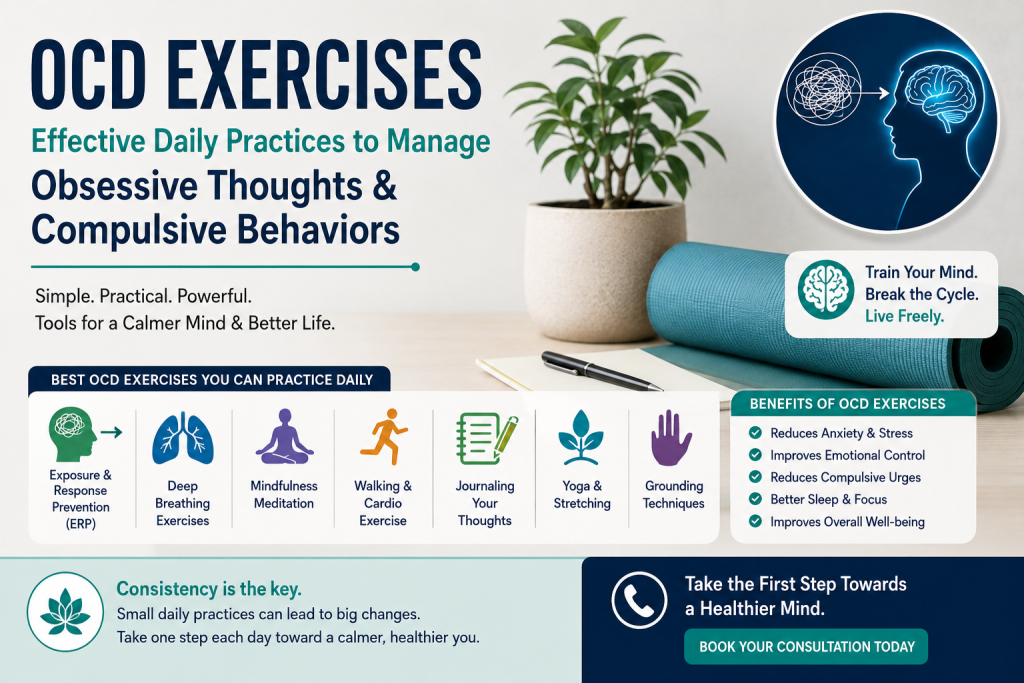
Benefits of OCD exercise include:
- Reduced anxiety and stress
- Better emotional control
- Improved sleep quality
- Reduced compulsive urges
- Enhanced confidence
- Better concentration
- Improved brain flexibility
When practiced consistently, OCD exercise methods can support therapy and medication outcomes.
Best OCD Exercise Techniques for Daily Life
1. Exposure and Response Prevention (ERP)
ERP is considered one of the most effective OCD exercise techniques worldwide.
This method involves:
- Gradually facing fears
- Avoiding compulsive reactions
- Allowing anxiety to decrease naturally
Example
A person afraid of contamination may touch a doorknob without immediately washing hands.
Initially, anxiety rises. Over time, the brain learns that the feared outcome does not occur, reducing compulsive behavior naturally.
Benefits of ERP OCD Exercise
- Reduces compulsions
- Builds emotional tolerance
- Weakens obsessive fears
- Creates long-term improvement
ERP should ideally be practiced under the supervision of an experienced psychiatrist or psychologist.
2. Deep Breathing OCD Exercise
Deep breathing helps calm the nervous system and reduce panic associated with intrusive thoughts.
Simple Deep Breathing Technique
- Sit comfortably
- Inhale slowly for 4 seconds
- Hold breath for 4 seconds
- Exhale slowly for 6 seconds
- Repeat for 10 minutes
This OCD exercise improves relaxation and helps individuals respond calmly during obsessive episodes.
3. Mindfulness OCD Exercise
Mindfulness teaches people to observe thoughts without reacting emotionally.
Instead of fighting intrusive thoughts, mindfulness encourages acceptance without judgment.
Mindfulness Practices
- Guided meditation
- Body scan meditation
- Breathing awareness
- Thought observation exercises
Regular mindfulness OCD exercise reduces emotional distress and increases mental clarity.
4. Walking and Cardio Exercise for OCD
Physical activity naturally reduces stress hormones and increases serotonin levels.
Best Cardio OCD Exercise Options
- Brisk walking
- Jogging
- Cycling
- Swimming
- Dancing
Even 30 minutes of daily exercise can significantly improve OCD symptoms.
5. Journaling OCD Exercise
Writing thoughts down can reduce emotional overload and help identify triggers.
Journaling Prompts
- What intrusive thought occurred today?
- What triggered anxiety?
- How intense was the compulsion?
- Did I resist the compulsion?
This OCD exercise promotes self-awareness and emotional processing.
6. Grounding Techniques for OCD
Grounding exercises help individuals reconnect with the present moment during anxiety attacks.
5-4-3-2-1 Grounding OCD Exercise
Identify:
- 5 things you see
- 4 things you touch
- 3 things you hear
- 2 things you smell
- 1 thing you taste
This technique reduces panic and helps interrupt obsessive thinking patterns.
7. Yoga as an OCD Exercise
Yoga combines breathing, mindfulness, and movement to calm the brain and body.
Recommended Yoga Poses
- Child’s Pose
- Cat-Cow Stretch
- Mountain Pose
- Legs-Up-The-Wall Pose
- Corpse Pose
Yoga-based OCD exercise practices improve emotional balance and reduce mental fatigue.
8. Progressive Muscle Relaxation
This OCD exercise focuses on tightening and relaxing muscles gradually.
Steps
- Tighten one muscle group
- Hold for 5 seconds
- Relax slowly
- Move to the next muscle group
This exercise lowers physical tension linked with anxiety disorders.
Daily OCD Exercise Routine
Here is a simple routine individuals can follow:
| Time | OCD Exercise |
|---|---|
| Morning | Deep breathing + stretching |
| Afternoon | Walking or cardio |
| Evening | Mindfulness meditation |
| Night | Journaling + muscle relaxation |
Consistency is more important than intensity
Foods and Lifestyle Habits That Support OCD Recovery
While OCD exercise methods are highly effective, lifestyle improvements also matter.
Helpful Habits
- Regular sleep schedule
- Balanced nutrition
- Reduced caffeine intake
- Limited alcohol consumption
- Healthy social interaction
- Reduced screen stress
Foods That Support Brain Health
- Nuts and seeds
- Green vegetables
- Fruits
- Omega-3-rich foods
- Whole grains
A healthy body supports a healthier mind.
Common Mistakes People Make During OCD Exercise
1. Expecting Immediate Results
OCD recovery takes time. Consistent effort matters.
2. Avoiding Discomfort
Temporary anxiety is part of healing.
3. Practicing Alone Without Guidance
Severe OCD symptoms often require professional support.
4. Stopping Medication Suddenly
Medication changes should only occur under medical supervision.
When to Seek Professional Help
OCD symptoms should never be ignored if they:
- Affect work or studies
- Harm relationships
- Cause sleep problems
- Increase anxiety attacks
- Lead to depression
- Cause social isolation
Professional psychiatric care provides structured treatment plans including:
- Cognitive Behavioral Therapy (CBT)
- ERP Therapy
- Medication management
- Lifestyle guidance
- Emotional support
Professional OCD Treatment in Pune
If you or your loved one struggles with obsessive thoughts, compulsive habits, panic, or severe anxiety, early treatment can make a major difference.
At Dr. Ninad Baste and Dr. Vidya Ganapathy, patients receive compassionate and evidence-based psychiatric care for OCD and related mental health conditions.
Specialists:
- Dr. Ninad Baste
MBBS, MD (Psychological Medicine) - Dr. Vidya Ganapathy
MBBS, DPM, MD (Psychological Medicine)
They provide personalized treatment approaches focused on:
- OCD management
- Anxiety disorders
- Stress management
- Depression treatment
- Behavioral therapy support
- Emotional wellness
Why Early OCD Treatment Is Important
Many people delay treatment due to stigma or lack of awareness. However, untreated OCD can become more severe over time and significantly affect quality of life.
Early diagnosis combined with proper OCD exercise methods, therapy, and psychiatric support can help individuals:
- Regain emotional control
- Improve relationships
- Restore confidence
- Improve productivity
- Live a healthier and calmer life
Frequently Asked Questions About OCD Exercise
Can OCD exercise completely cure OCD?
OCD exercise techniques help manage symptoms effectively, especially when combined with professional therapy and medical guidance.
How long does OCD recovery take?
Recovery varies from person to person. Consistent therapy and OCD exercise routines often show improvement within weeks to months.
Is exercise scientifically proven for OCD?
Yes. Studies show physical activity and mindfulness-based exercises reduce anxiety and compulsive behaviors.
Which OCD exercise is most effective?
ERP therapy is considered the gold-standard OCD exercise approach for long-term improvement.
Can children practice OCD exercise techniques?
Yes, but exercises should be adapted according to age and supervised by mental health professionals.
Final Thoughts
Living with OCD can feel overwhelming, but recovery is possible with the right support system, structured therapy, and consistent OCD exercise practices. Simple daily habits such as mindfulness, breathing exercises, journaling, and physical activity can gradually reduce anxiety and help individuals regain control over intrusive thoughts.
The key is consistency, patience, and professional guidance. Mental health deserves the same attention as physical health, and seeking help is a sign of strength—not weakness.
Book Your Consultation Today
If obsessive thoughts, anxiety, or compulsive behaviors are affecting your daily life, consult experienced mental health specialists for personalized treatment and recovery guidance.
Contact:
Dr. Ninad Baste
MBBS, MD (Psychological Medicine)
Dr. Vidya Ganapathy
MBBS, DPM, MD (Psychological Medicine)
Take the first step toward a calmer and healthier mind with expert OCD treatment and emotional wellness support in Pune.

Dr. Ninad Baste
DR. NINAD BAST, MBBS MD [Psychological Medicine]
Affiliations: Maharashtra Medical Council [registration no.: 2003/03/1356], Pune Psychiatry Association, Indian Psychiatry Society, Bombay Psychiatry Society.
A desire to understand patients' needs in their illness phase and help them through it led Dr. Ninad to specialize in psychiatry after completing his MBBS. He earned his MD in psychological medicine from Mumbai's prestigious Seth GS Medical College. His special areas of interest are neurocognitive medicine, sexual medicine, marital counseling, and personal counseling.
He held the post of president of the Indian Psychological Society [IPS-Pune Chapter] for the year 2017–2018. Dr. Ninad was also a postgraduate guide and an associate professor at Smt. Kashibai Navale Medical College and a general hospital. He has worked on the editorial board of the Annals of Indian Psychiatry, which is the official journal of the IPS-West zone.
He has been a faculty member for various conferences and a member of the organizing committees of some conferences held in Pune.