Table of contents
- Why Brain Imaging Studies Confirm Psychotherapy Changes the Brain
- How Neuroplasticity Makes Psychotherapy Effective
- What Brain Scans Show Before and After Therapy
- Why This Evidence Matters for Choosing Treatment
- The Role of Consistency in Brain Change
- Why Seeing a Psychiatrist Early Makes a Real Difference
- Dr. Ninad Baste’s Approach at Mansa Clinic
- The Real Benefits of Consulting a Psychiatrist
- Conclusion
- Frequently Asked Questions
KEY TAKEAWAYS
- Brain imaging studies confirm psychotherapy changes the brain in ways that are visible on fMRI and PET scans, not just in how a person feels or behaves.
- Talk therapy produces measurable shifts in brain regions linked to fear, emotional regulation and decision making, similar in some cases to changes seen with medication.
- Conditions such as depression, anxiety, OCD and PTSD show distinct patterns of brain activity before therapy that shift toward healthier patterns after consistent sessions.
- Neuroplasticity, the brain’s ability to reorganise itself, is the biological mechanism that allows psychotherapy to create lasting change.
- Combining therapy with psychiatric support often gives the most stable, long term outcome for complex mental health conditions.
- Seeing a psychiatrist early means access to both structured therapy and clinical monitoring, which improves the odds of full recovery.
QUICK FACTS
- Imaging techniques used in psychotherapy research: fMRI, PET scans, EEG
- Brain regions most studied: amygdala, prefrontal cortex, hippocampus, anterior cingulate cortex
- Conditions with strong imaging evidence: depression, OCD, PTSD, social anxiety, panic disorder
- Typical therapy duration before measurable brain change: 8 to 16 weeks of consistent sessions
- Mechanism behind the change: neuroplasticity and reduced amygdala reactivity
Why Brain Imaging Studies Confirm Psychotherapy Changes the Brain
For decades, psychotherapy was seen as something that changed a person’s thoughts and feelings, but not something that left a physical trace. That view has shifted. Brain imaging studies confirm psychotherapy changes the brain in a measurable, visible way, and this evidence has changed how psychiatrists and clinical psychologists think about treatment planning.
Modern neuroimaging tools like functional MRI and PET scans let researchers watch the brain at work before and after a course of therapy. What they consistently find is that structured talk therapy, cognitive behavioural therapy in particular, produces real shifts in brain activity. These shifts are not subtle placebo effects. They show up in the same regions that antidepressant and anti anxiety medications target.
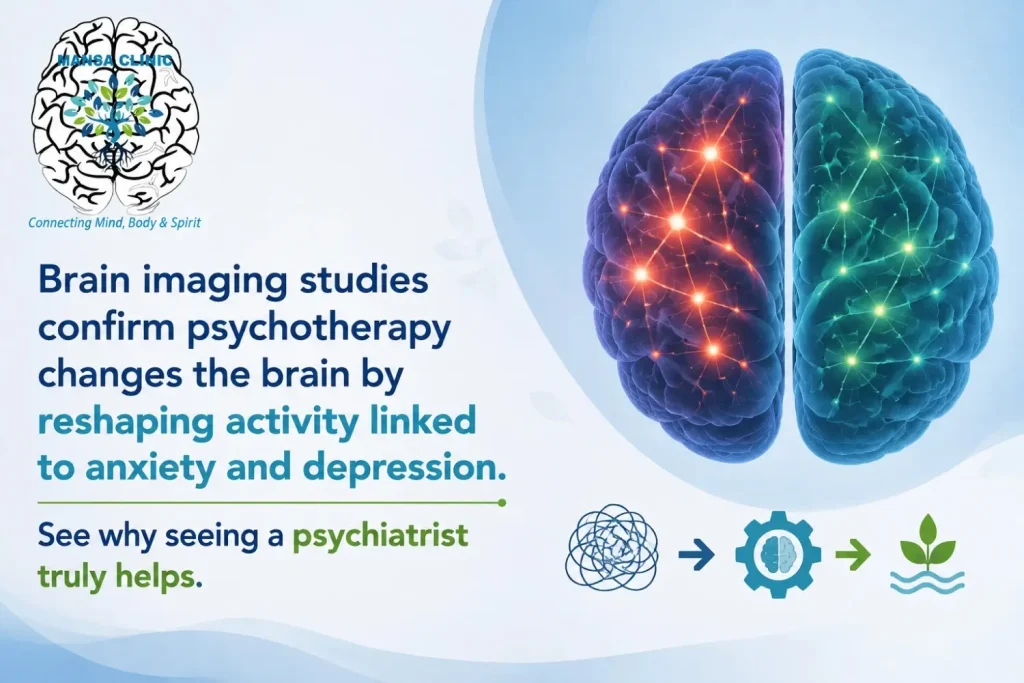
This matters for patients because it removes the old stigma that therapy is a soft or unproven option compared to medication. Brain imaging studies confirm psychotherapy changes the brain at a biological level, which means the benefits a patient feels are backed by measurable neurological change, not just subjective improvement.
How Neuroplasticity Makes Psychotherapy Effective
Neuroplasticity is the brain’s capacity to form new neural connections and reorganise existing ones in response to experience. This is the same mechanism that lets a person learn a new language or recover motor function after a stroke. Psychotherapy uses this same biological process, just applied to emotional and behavioural patterns instead of physical skills.
When a person practices new ways of thinking and responding during therapy sessions, and then repeats these patterns in daily life, the brain begins to strengthen new neural pathways while weakening the old, unhelpful ones. Over weeks of consistent sessions, this repetition becomes visible on brain scans as reduced activity in fear and stress centres and increased activity in regions responsible for reasoning and emotional control.
This is one of the clearest ways that brain imaging studies confirm psychotherapy changes the brain rather than simply changing behaviour on the surface. The change is structural and functional, not just cosmetic. The National Institute of Mental Health explains that psychotherapy works by helping patients understand and change behaviours, thoughts and emotions that contribute to their illness, a process that neuroimaging research now shows has a real biological footprint.
What Brain Scans Show Before and After Therapy
Research using fMRI and PET imaging has tracked specific patterns across common mental health conditions. In depression, imaging often shows overactivity in the amygdala, the brain’s threat detection centre, alongside reduced activity in the prefrontal cortex, which governs rational thought and emotional regulation. After a course of cognitive behavioural therapy, many patients show amygdala activity calming down while prefrontal cortex engagement increases.
In obsessive compulsive disorder, imaging studies have documented hyperactivity in the orbitofrontal cortex and the caudate nucleus, the circuit responsible for repetitive checking and intrusive thought loops. Exposure and response prevention therapy, a specific form of CBT, has been shown to reduce this hyperactivity in patients who respond well to treatment.
Post traumatic stress disorder shows a similar pattern. The amygdala tends to be overactive in people with PTSD, while the hippocampus, which helps contextualise memory, often shows reduced volume or activity. Trauma focused therapy approaches have been associated with improved hippocampal function and calmer amygdala responses over time.
Table: Brain Regions and Therapy Related Changes
| Brain Region | Role | Pattern Before Therapy | Pattern After Therapy |
|---|---|---|---|
| Amygdala | Fear and threat response | Overactive in anxiety, depression, PTSD | Reduced reactivity |
| Prefrontal Cortex | Reasoning and emotional control | Underactive in depression | Increased engagement |
| Hippocampus | Memory and context | Reduced activity in PTSD | Improved function |
| Orbitofrontal Cortex | Decision making, habit loops | Hyperactive in OCD | Normalised activity |
| Anterior Cingulate Cortex | Conflict monitoring, focus | Irregular in anxiety disorders | More stable activity |
Why This Evidence Matters for Choosing Treatment
Patients and families often ask whether therapy alone is enough, or whether medication is required. Brain imaging studies confirm psychotherapy changes the brain in ways that overlap significantly with what medication achieves, particularly for mild to moderate depression and anxiety. This does not mean medication is unnecessary for every case, but it does mean therapy is not a lesser option chosen only when medication is unavailable.
For more severe or treatment resistant conditions, a combination of therapy and psychiatric medication management tends to produce the most stable, lasting results. A psychiatrist can assess which approach, or which combination, fits a particular patient’s history, symptom severity and response pattern. This is why an initial consultation with a qualified psychiatrist is often the right first step before deciding on a treatment path.
At Mansa Clinic, patients receive this kind of structured evaluation before any treatment plan is finalised. The clinic’s approach to mental health treatment in Pune combines psychiatric assessment with therapy referral where appropriate, so the treatment plan is based on the individual, not a one size fits all protocol.
The Role of Consistency in Brain Change
One detail that often gets missed in conversations about therapy is that brain change is not instant. Most of the imaging research showing measurable change was conducted after 8 to 16 weeks of consistent, weekly sessions. Skipping sessions or stopping early interrupts the neuroplastic process before new pathways have had time to stabilise.
This is similar to how skipping doses of medication reduces its effectiveness. Brain imaging studies confirm psychotherapy changes the brain, but only when therapy is engaged with consistently, and when the techniques learned in session are actively practiced between sessions. A psychiatrist or therapist tracking a patient’s progress can identify early on whether the current approach is working or whether adjustments are needed.
Why Seeing a Psychiatrist Early Makes a Real Difference
Many people delay seeking psychiatric help because they assume their symptoms are not severe enough, or because therapy and medication feel like a last resort. The imaging evidence suggests the opposite approach makes more sense. Early, structured intervention gives the brain more time to reorganise itself before unhelpful patterns become deeply entrenched.
A psychiatrist brings clinical training that a general physician or unsupervised self help approach cannot replace. This includes the ability to differentiate between overlapping conditions, such as anxiety presenting as physical symptoms, or depression masking as chronic fatigue. A psychiatrist can also monitor whether a treatment plan needs to include medication, therapy or both, and adjust the plan as brain based and behavioural markers of progress become clear.
Choosing to consult a psychiatrist in Pune early in the course of a mental health concern often shortens the overall path to recovery. It also reduces the risk of symptoms becoming chronic, which is harder to treat than early stage anxiety or depression.
Dr. Ninad Baste’s Approach at Mansa Clinic
Dr. Ninad Baste, MBBS, MD Psychiatry, leads Mansa Clinic in Aundh, Pune, with over 20 years of clinical experience in adult, child, geriatric and de-addiction psychiatry. His practice is built around the same principle that brain imaging research supports, that mental health conditions have a biological basis and respond to structured, evidence based treatment rather than generic advice.
Dr. Baste’s clinical approach includes detailed assessment of symptom history, coexisting conditions and treatment response before recommending a plan. For patients where therapy is appropriate, Mansa Clinic coordinates psychiatric care alongside therapy so that both the clinical and behavioural sides of treatment work together rather than in isolation. This is particularly relevant given how brain imaging studies confirm psychotherapy changes the brain most effectively when paired with proper clinical oversight for moderate to severe cases.
The clinic also offers specialised services including OCD treatment, de-addiction support and tDCS, a non invasive brain stimulation technique used for treatment resistant depression, giving patients access to a full range of options under one roof.
The Real Benefits of Consulting a Psychiatrist
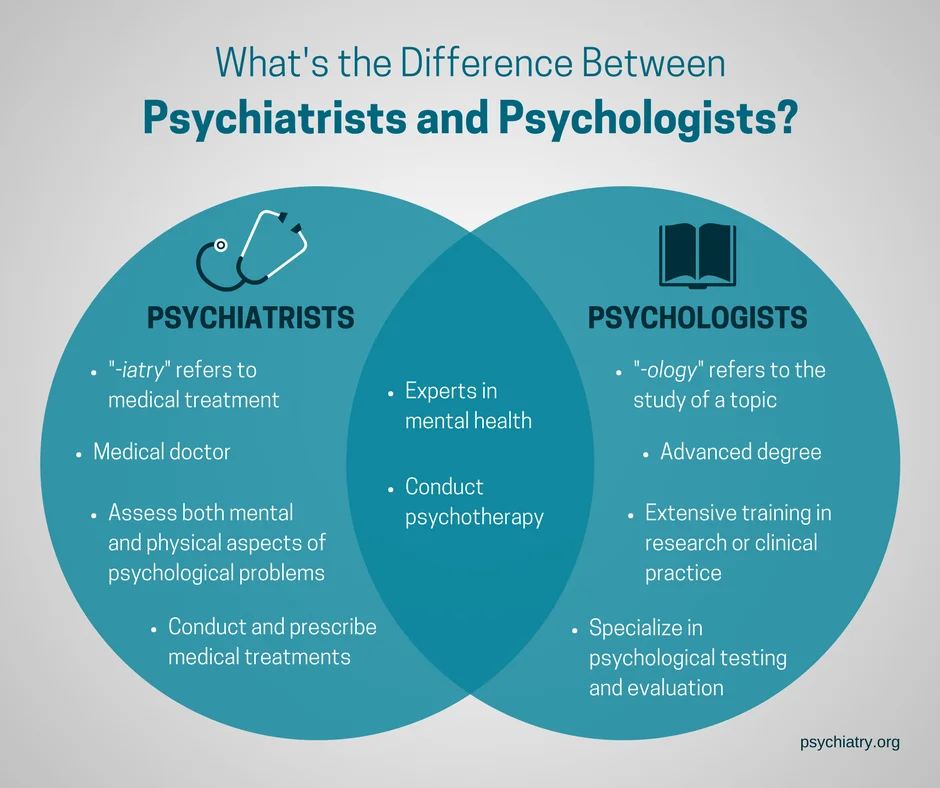
Choosing to see a psychiatrist offers several practical advantages beyond symptom relief. A psychiatrist can rule out medical causes for psychological symptoms, something a therapist alone is not trained to do. They can prescribe and monitor medication safely, adjusting doses based on response and side effects. They also bring an understanding of how different conditions overlap, which helps prevent misdiagnosis.
For patients dealing with anxiety, depression, OCD or trauma related symptoms, a psychiatrist offers a starting point that covers both immediate stabilisation and long term planning. This is especially valuable for people who have tried self help strategies or occasional counselling without seeing lasting improvement, since a clinical evaluation often uncovers factors that were not addressed before.
Conclusion
Brain imaging studies confirm psychotherapy changes the brain, and this evidence has reshaped how mental health treatment is approached today. What once looked like a purely subjective process is now understood to involve real, measurable shifts in brain activity, driven by the biological process of neuroplasticity. For patients weighing their treatment options, this research offers reassurance that therapy is a legitimate, evidence backed path to recovery, not a lesser alternative to medication.
The most effective outcomes tend to come from structured, consistent treatment guided by a qualified psychiatrist who can combine therapy, medication and monitoring based on individual needs. If you or someone you know is dealing with anxiety, depression, OCD or another mental health concern, an early consultation with a psychiatrist in Pune can make a meaningful difference in the speed and stability of recovery. Book a consultation at Mansa Clinic to begin a treatment plan built around your specific symptoms and history.
Frequently Asked Questions
Do brain imaging studies really confirm psychotherapy changes the brain?
Yes. Multiple fMRI and PET based studies have documented measurable changes in brain activity, particularly in the amygdala, prefrontal cortex and hippocampus, following a consistent course of psychotherapy. These changes are not limited to how a patient reports feeling, they are visible on brain scans.
How long does it take for psychotherapy to change the brain?
Most imaging studies show measurable change after 8 to 16 weeks of consistent, weekly therapy sessions. The exact timeline depends on the condition being treated, the type of therapy used and how consistently a patient engages with sessions and practices skills between them.
Is psychotherapy as effective as medication based on brain imaging research?
For mild to moderate depression and anxiety, imaging research shows therapy can produce brain changes that overlap significantly with what medication achieves. For more severe or treatment resistant conditions, a combination of therapy and psychiatric medication management typically produces the best outcome.
Which brain regions change the most during psychotherapy?
The amygdala, prefrontal cortex, hippocampus and orbitofrontal cortex show the most consistent changes across imaging studies, depending on the condition being treated. Anxiety and PTSD tend to show amygdala related changes, while OCD shows changes in the orbitofrontal cortex and caudate nucleus.
Should I see a psychiatrist or a therapist first?
A psychiatrist is often the better starting point because they can assess for underlying medical or psychiatric conditions, prescribe medication if needed and refer to therapy where appropriate. This ensures the treatment plan addresses the full clinical picture rather than one part of it.
What conditions have the strongest brain imaging evidence for psychotherapy benefit?
Depression, obsessive compulsive disorder, post traumatic stress disorder, social anxiety and panic disorder all have substantial imaging research supporting measurable brain change following structured psychotherapy.

Dr. Ninad Baste
DR. NINAD BAST, MBBS MD [Psychological Medicine]
Affiliations: Maharashtra Medical Council [registration no.: 2003/03/1356], Pune Psychiatry Association, Indian Psychiatry Society, Bombay Psychiatry Society.
A desire to understand patients' needs in their illness phase and help them through it led Dr. Ninad to specialize in psychiatry after completing his MBBS. He earned his MD in psychological medicine from Mumbai's prestigious Seth GS Medical College. His special areas of interest are neurocognitive medicine, sexual medicine, marital counseling, and personal counseling.
He held the post of president of the Indian Psychological Society [IPS-Pune Chapter] for the year 2017–2018. Dr. Ninad was also a postgraduate guide and an associate professor at Smt. Kashibai Navale Medical College and a general hospital. He has worked on the editorial board of the Annals of Indian Psychiatry, which is the official journal of the IPS-West zone.
He has been a faculty member for various conferences and a member of the organizing committees of some conferences held in Pune.