
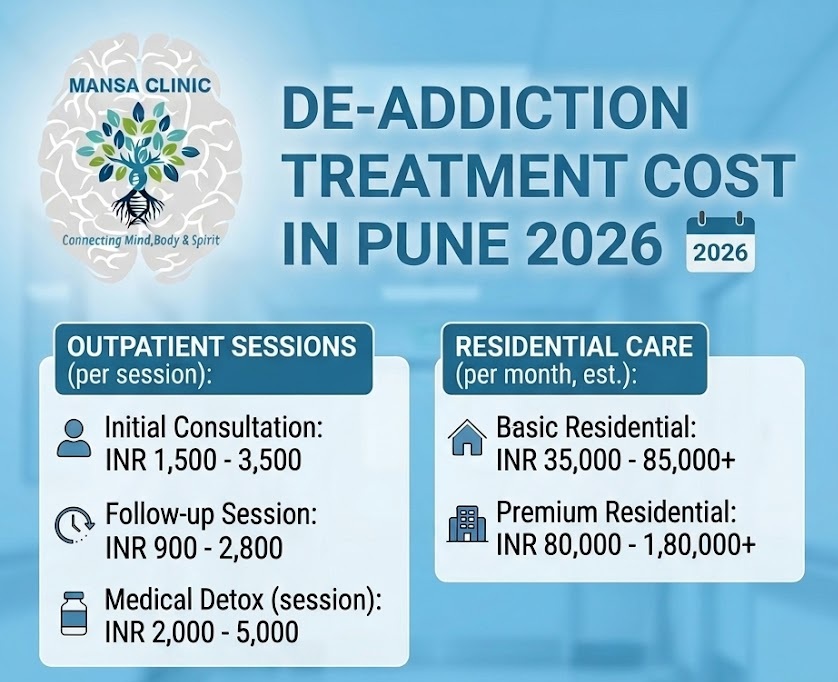
| KEY TAKEAWAYS – De-addiction treatment cost in Pune ranges from INR 500 to INR 3,000 per outpatient session depending on the specialist and service. – Residential de-addiction programmes in Pune typically cost INR 30,000 to INR 1,50,000 per month (Industry estimate). – Alcohol, opioid, cannabis and nicotine dependence are the four most commonly treated addictions in Pune clinics. – WHO data shows harmful alcohol use alone accounts for 5.3% of all global deaths, making early treatment critical. – Behavioural counselling, detoxification support and relapse-prevention therapy are the three core pillars of de-addiction care. – Most Pune insurance plans do not cover de-addiction costs; CGHS and ESI empanelment varies by provider. – Early intervention significantly reduces treatment complexity and overall cost; consult a specialist at the first sign of dependence. |
Introduction
De-addiction treatment cost in Pune is one of the most searched health queries in the city, yet reliable, transparent information is surprisingly hard to find. If you or a family member is considering professional help for alcohol, drug or nicotine dependence, understanding what treatment actually costs is an essential first step.
Mansa Clinic in Aundh, Pune is led by Dr. Ninad Baste, MD Psychiatry, with 25 years of experience in addiction psychiatry. This guide draws on clinical practice in Pune to provide a realistic, unexaggerated breakdown of costs and care pathways. All data points are sourced from published health authorities or marked as industry estimates.
The goal isn’t to give you a number in isolation. It’s to help you understand what you’re paying for, what to expect at each stage, and how to find the right specialist in Pune for your specific situation.
| QUICK FACTS: De-addiction in Pune – India has an estimated 5.7 crore individuals with alcohol-use disorder (NMHP India, 2020). – Pune ranks among Maharashtra’s top five cities for reported substance use cases (State Mental Health Authority, Industry estimate). – Outpatient de-addiction consultations in Pune start at INR 500 and go up to INR 3,000 per session. – Residential rehabilitation in Pune is estimated at INR 30,000 to INR 1,50,000 per month depending on facility grade. – Cognitive Behavioural Therapy (CBT) and Motivational Enhancement Therapy (MET) are the two most evidence-based psychotherapy approaches for addiction. – Relapse rates for substance use disorders are comparable to those of other chronic illnesses like hypertension (National Institute on Drug Abuse). |
Pune De-addiction Statistics 2025-2026
| Metric | Data | Source |
| Prevalence of alcohol-use disorder in India | 5.7 crore individuals | NMHP India, 2020 |
| Opioid dependence cases, India | 22.5 lakh individuals | NCMH Burden of Disease Report |
| Cannabis use disorder, India (estimated) | 31 lakh individuals | AIIMS National Drug Survey 2019 |
| Nicotine dependence, India (tobacco users) | ~26.7 crore (28.6% of adults) | Global Adult Tobacco Survey India 2016-17 |
| Persons seeking de-addiction treatment in Maharashtra (annual) | Approx. 40,000 | State Mental Health Authority, Industry estimate |
| Average duration of residential rehabilitation | 4 to 12 weeks | Clinical consensus, Industry estimate |
| CBT success rate in alcohol cessation at 12 months | 40-60% sustained abstinence | PubMed meta-analysis, 2022 |
| Pune private de-addiction consultation fees (range) | INR 500 to INR 3,000 per session | Industry estimate, Pune clinics 2025-26 |
What Is De-addiction Treatment? A Clinical Overview
De-addiction treatment is a structured, medically supervised process that helps a person reduce and ultimately stop their dependence on a substance such as alcohol, drugs or tobacco. It isn’t a single appointment; it’s a continuum of care that spans assessment, medical stabilisation, psychotherapy and long-term relapse prevention.
Dependence occurs when the brain’s reward and stress-regulation circuits adapt to the presence of a substance, making it progressively harder to function without it. The World Health Organization classifies substance-use disorders as chronic health conditions requiring sustained clinical attention, comparable in complexity to managing diabetes or hypertension.
In Pune, treatment is available across three levels of care: outpatient sessions at a specialist clinic, day programmes that occupy part of the week, and residential programmes for those who need a structured, distraction-free environment. The right level depends on the severity of dependence, co-occurring psychiatric conditions and the patient’s home support system.
Types of Addiction Treated at De-addiction Clinics in Pune
Understanding which type of dependence you or a family member is dealing with matters, because treatment pathways differ significantly across substance categories. The four most commonly treated forms of addiction at Pune clinics are:
- Alcohol dependence: The most prevalent substance-use disorder in Maharashtra. Treatment involves medically monitored withdrawal support, psychotherapy and structured relapse prevention.
- Opioid and prescription drug dependence: Includes heroin and misused prescription painkillers or sedatives. Requires a carefully managed medical detox followed by long-term behavioural therapy.
- Cannabis dependence: Often underestimated in severity, cannabis-use disorder requires psychotherapy-led intervention, particularly CBT and motivational approaches.
- Nicotine dependence: Tobacco and e-cigarette dependence is treated through a combination of behavioural counselling and evidence-based cessation support.
Behavioural addictions such as gambling and compulsive internet use are also managed at psychiatric de-addiction services in Pune, though their treatment is classified separately under impulse-control disorders.
What Does the De-addiction Treatment Process Involve?
A complete de-addiction programme follows three broad phases. Knowing what each phase involves helps you anticipate the duration, intensity and costs involved.
Phase 1: Assessment and Detoxification Support
The first step is a thorough psychiatric and medical evaluation to determine dependence severity, any co-occurring conditions such as depression or anxiety, and the safest approach to withdrawal. For substances that carry a risk of severe physical withdrawal, medical supervision is essential and will be discussed clearly during the consultation.
Phase 2: Psychotherapy and Skills Building
This is the core of long-term recovery. Evidence-based therapies used in Pune de-addiction programmes include Cognitive Behavioural Therapy (CBT), Motivational Enhancement Therapy (MET) and relapse-prevention counselling. These sessions help the individual identify triggers, develop coping strategies and build a life that supports sobriety.
Phase 3: Relapse Prevention and Aftercare
Recovery is an ongoing process. Monthly or bi-monthly follow-up sessions with a de-addiction specialist in Pune help individuals maintain progress, manage stressors and address early warning signs before a relapse occurs. Family counselling is often included at this stage.
De-addiction Treatment Cost in Pune 2026: Detailed Breakdown
The following table reflects realistic fee ranges based on clinical practice in Pune. All figures are in Indian Rupees (INR). Costs vary based on specialist experience, clinic infrastructure and the complexity of your case.
| Service / Treatment Type | Typical Cost Range (INR) | Frequency | Notes |
| Initial psychiatric consultation | 800 – 2,500 | Once | Includes detailed assessment; first session typically longer |
| Follow-up outpatient session | 500 – 1,500 | Weekly or bi-weekly | Duration 30-60 min depending on case complexity |
| Individual CBT session (psychologist) | 800 – 2,000 | Weekly | Often 8-16 sessions recommended |
| Family counselling session | 1,000 – 2,500 | Monthly or as needed | Critical for recovery; often underutilised |
| Group therapy session | 300 – 800 per session | Weekly | Available at select Pune clinics |
| Residential rehabilitation (basic) | 30,000 – 60,000 per month | 4-12 weeks | Industry estimate; includes accommodation |
| Residential rehabilitation (premium) | 75,000 – 1,50,000 per month | 4-12 weeks | Industry estimate; includes holistic therapies |
| Nicotine cessation programme (outpatient) | 2,000 – 8,000 total | 6-8 week course | Behavioural counselling component |
| Relapse prevention follow-up | 500 – 1,200 per session | Monthly | Ongoing; critical for long-term outcomes |
Note: These ranges are approximate and based on clinical experience in Pune. Actual fees will be communicated transparently at your first consultation at Mansa Clinic.
Outpatient vs. Residential De-addiction: Which Is Right for You?
The choice between outpatient and residential care is clinical, not financial. Your psychiatrist will recommend the appropriate setting based on dependence severity, previous treatment history and safety considerations. Here’s a comparative overview to help you ask better questions.
| Factor | Outpatient Programme | Residential Programme |
| Best suited for | Mild to moderate dependence; stable home environment | Severe dependence; high relapse risk; unsafe home setting |
| Duration | 8 to 24 weeks of regular sessions | 4 to 12 weeks of immersive stay |
| Intensity | 1 to 3 sessions per week | Full-day structured programme |
| Work continuity | Can continue working | Requires leave from work |
| Family involvement | High; family lives at home | Scheduled family visits or sessions |
| Approximate Pune cost | INR 15,000 to 40,000 total (course) | INR 30,000 to 1,50,000 per month (Industry estimate) |
| Follow-up care | Continues at same clinic | Transition to outpatient aftercare recommended |
Does Health Insurance Cover De-addiction Treatment in India?
Following the Mental Healthcare Act, 2017, Indian insurers are mandated to provide coverage for mental health conditions at par with physical conditions. In practice, however, de-addiction treatment coverage varies considerably across insurers and policy types.
The Mental Healthcare Act explicitly states that treatment for mental illness, including substance-use disorders, must be covered by insurers. Despite this, policy exclusions for ‘self-inflicted harm’ or ‘substance abuse’ remain common in older policies. If you hold a post-2018 health insurance policy, it’s worth reviewing your mental health coverage clause or speaking directly with your insurer.
Government employees covered under CGHS or ESI may have partial coverage for psychiatric consultations. Speak to a financial counsellor at Mansa Clinic or your HR department to understand your specific entitlements before committing to a treatment plan.
When Should You Speak to a De-addiction Specialist in Pune?
Addiction doesn’t follow a predictable timeline, and there’s no minimum threshold of severity required before seeking help. That said, the following signs strongly suggest it’s time to speak to a psychiatrist who specialises in de-addiction:
- Unsuccessful attempts to cut down or stop substance use on your own.
- Using a substance to manage withdrawal symptoms or to feel ‘normal’.
- Relationships with family, friends or colleagues have been affected by substance use.
- Work performance, attendance or professional reputation has declined.
- Physical health symptoms that you or your doctor are attributing to substance use.
- Increasing amounts of the substance needed to achieve the same effect (tolerance).
- Thinking about the substance frequently, or planning your day around its availability.
If three or more of the above apply, a structured assessment with a de-addiction specialist is strongly recommended. Early intervention almost always means a shorter treatment course and lower overall cost.
De-addiction Services in Aundh, Baner and Pune: What to Look For
Pune’s growing population and the pressures of its IT, manufacturing and education sectors have created a significant and underserved need for de-addiction services. Residents of Aundh, Baner, Wakad, Pimple Saudagar and nearby areas often travel to Parihar Chowk, Aundh to access Mansa Clinic’s de-addiction services given its accessible location near Westend Mall and Spicer College.
When choosing a de-addiction specialist in Pune, look for a psychiatrist with verifiable postgraduate qualifications (MD Psychiatry or DPM), membership in the Indian Psychiatric Society, and a clear protocol for managing both the medical and psychological aspects of dependence. A clinic that offers individual therapy, family counselling and structured follow-up under one roof will generally produce better outcomes than a fragmented multi-provider approach.
At Mansa Clinic, Dr. Ninad Baste provides integrated de-addiction assessments and outpatient treatment programmes in a confidential, non-judgemental clinical setting. All consultations are private. Fees are discussed transparently before any programme begins.
How to Choose the Right De-addiction Specialist in Pune
The quality of your specialist matters more than the price point. Here’s a short checklist to guide your decision:
- Verify qualifications: Look for MD Psychiatry, DPM, or MBBS with a recognised postgraduate degree. Membership in the Indian Psychiatric Society or Pune Psychiatric Association is a useful signal.
- Confirm integrated care: The best outcomes arise when psychiatric assessment, medical support and psychotherapy are coordinated by the same team.
- Ask about confidentiality: A reputable specialist will reassure you clearly that clinical records are protected and consultations are private.
- Discuss the plan before committing: A trustworthy clinic will offer a clear treatment plan and transparent fee structure before you begin any programme.
- Check for family involvement options: Addiction affects the entire family system. A specialist who includes family counselling in the treatment design tends to produce stronger long-term results.
Conclusion: Taking the First Step Toward Recovery in Pune
Understanding de-addiction treatment cost in Pune is important, but it’s the first step rather than the final consideration. Substance dependence is a recognised medical condition, not a failure of character. It responds well to structured, specialist-led treatment and the earlier that treatment begins, the more straightforward the path to recovery tends to be.
At Mansa Clinic in Aundh, Pune, Dr. Ninad Baste and his team offer confidential, evidence-based de-addiction assessments and outpatient programmes. All consultations are private, and treatment plans are discussed transparently before any commitment is made. If you’d like to understand whether specialist de-addiction support is right for you or someone you care about, speaking to a qualified psychiatrist is the most reliable way to get a clear, personalised answer.
You can reach Mansa Clinic at Parihar Chowk, above Parihar Kids, near Westend Mall and Spicer College, Aundh, Pune, or visit mansaclinicpune.com to speak with a specialist in confidence.
Frequently Asked Questions
Total cost depends on the type of substance, severity of dependence and the level of care required. An outpatient programme typically costs INR 15,000 to INR 40,000 over 2 to 6 months of sessions. Residential programmes cost INR 30,000 to INR 1,50,000 per month (Industry estimate). A specialist consultation is the first step to getting a personalised cost estimate.
Yes. Clinical consultations at registered psychiatric clinics in Pune are protected by patient confidentiality as per the Mental Healthcare Act, 2017. Your records are not shared with your employer, family members or any third party without your written consent.
For mild to moderate dependence, outpatient treatment is often equally effective and allows individuals to continue working and living at home. Your psychiatrist will assess the appropriate level of care based on clinical criteria. Don’t assume you need a residential programme without a specialist assessment.
There’s no single timeline. Outpatient programmes typically run for 3 to 6 months of active sessions, followed by monthly or bi-monthly follow-ups for 12 to 24 months. Residential programmes are usually 4 to 12 weeks. Recovery is a long-term process, and the aftercare phase is just as important as the initial treatment.
The Mental Healthcare Act, 2017 mandates that insurers cover mental health conditions including substance-use disorders. In practice, coverage varies by policy. Post-2018 health insurance policies are more likely to include mental health parity. Review your policy documents or speak to your insurer before beginning treatment.
Voluntary treatment consistently produces better outcomes than compelled treatment. However, in situations where the individual lacks decision-making capacity or poses a danger to themselves or others, the Mental Healthcare Act provides a legal framework for supported admission. A psychiatrist can guide the family through the appropriate and lawful steps.
Detoxification refers to the medically supervised process of managing withdrawal from a substance. It’s typically the first phase of treatment and lasts days to weeks. De-addiction treatment is the full continuum of care that follows, including psychotherapy, relapse prevention and aftercare. Detox alone is not a complete treatment for substance dependence.
| MEDICAL DISCLAIMER This article is written for general informational purposes only and does not constitute medical advice. All cost figures are indicative estimates and may vary based on individual clinical requirements, specialist fees and facility standards. Substance-use disorders are serious medical conditions; do not attempt to self-medicate or discontinue substance use abruptly without medical supervision, as withdrawal from certain substances can carry clinical risks. Always consult a qualified psychiatrist or de-addiction specialist for a proper assessment and personalised treatment plan. Mansa Clinic and Dr. Ninad Baste do not guarantee specific treatment outcomes. This content has been reviewed for clinical accuracy in April 2026. |

Dr. Ninad Baste
DR. NINAD BAST, MBBS MD [Psychological Medicine]
Affiliations: Maharashtra Medical Council [registration no.: 2003/03/1356], Pune Psychiatry Association, Indian Psychiatry Society, Bombay Psychiatry Society.
A desire to understand patients' needs in their illness phase and help them through it led Dr. Ninad to specialize in psychiatry after completing his MBBS. He earned his MD in psychological medicine from Mumbai's prestigious Seth GS Medical College. His special areas of interest are neurocognitive medicine, sexual medicine, marital counseling, and personal counseling.
He held the post of president of the Indian Psychological Society [IPS-Pune Chapter] for the year 2017–2018. Dr. Ninad was also a postgraduate guide and an associate professor at Smt. Kashibai Navale Medical College and a general hospital. He has worked on the editorial board of the Annals of Indian Psychiatry, which is the official journal of the IPS-West zone.
He has been a faculty member for various conferences and a member of the organizing committees of some conferences held in Pune.